
Epstein. Venezuela. Minneapolis. Cuba. Iran.
Your web browser ought to come with a trigger warning these days. It’s tempting to just spend our days seething with rage. And maybe that’s the point. We’ve been convinced that anger is the answer.
In twenty-first-century pop culture, there’s probably been no bigger phenomenon than the Marvel movies. I saw them all until they ran out of steam. I parsed out the trailers for Easter eggs, stuck through the credits for the post-credit scenes. I loved all the cameos. I was a Marvel nerd. And in all those twenty-odd movies, one line, delivered by Bruce Banner, always struck me as perfect for our life and times:
“That’s my secret. I’m always angry.”
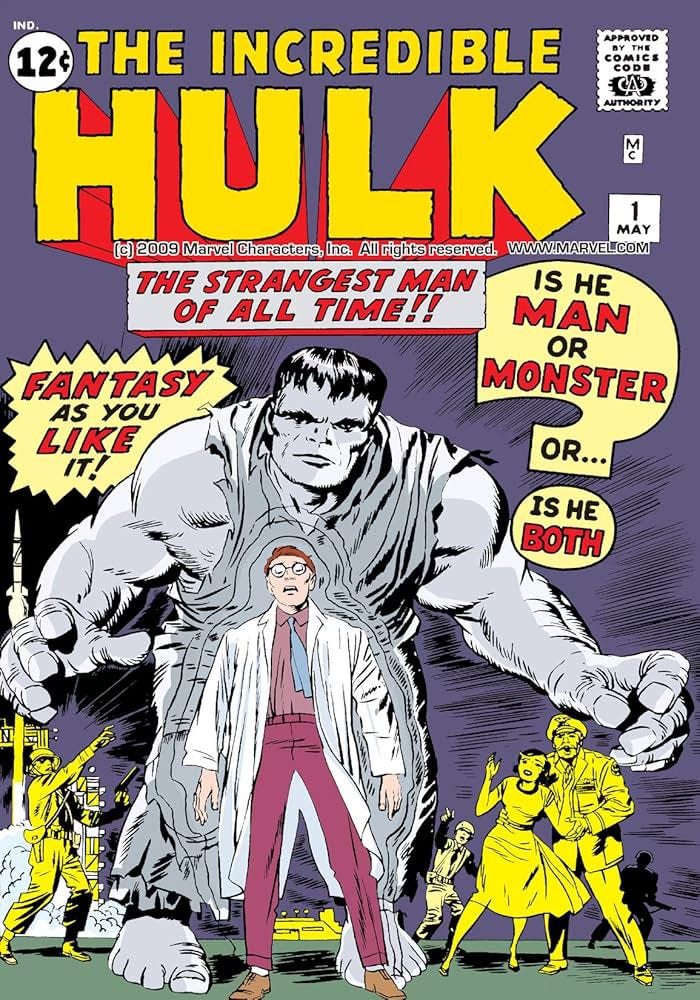
For those who had better things to do with their time than watch comic-book movies, when ultra-cerebral scientist Bruce Banner, played by Mark Ruffalo, gets angry, he turns into the Hulk, the strongest creature in a universe chock full of gods and superheroes. Anger makes him nearly omnipotent.
When I was a teenager, our generation’s Hulk was played by Bill Bixby in a green-skinned remake of The Fugitive television series. His iconic line was, “Don’t make me angry. You wouldn’t like me when I’m angry,” It is a favorite of nostalgia-laden comic book geeks. Bixby’s Hulk knew that his anger made him do stupid, destructive things. At the end of each episode, he’d have to leave behind the friends he made at the beginning of the hour. It was one of the few weekly programs that always ended on a sad note.
But 70’s Hollywood had another bigger, more iconic line about anger:
“I’m as mad as hell and I’m not going to take it anymore!”
That is, of course, from the 1976’s Network and it has come to define America as much as anything. Hell, Rolling Stone just wrote about how it is a fifty-year-old diagnosis of our current state.
It was meant to be a cautionary tale, not a how-to manual. But I can’t help but believe that Rupert Murdoch had it in mind when he launched Fox News.
The movie made during the time when CBS, NBC, and ABC were the only three networks in America, takes place at a fictional fourth network. The plot pivots on what is now a quaint idea—that broadcast news is a public service of the networks, part of their obligation to pay for the use of public airways. The corporate overlords at this fourth network decide that news should actually be profitable, and when their mentally ill news anchor, drops a jeremiad at the top of the national news broadcast, they have their new star.
Beale’s speech is a brilliant piece of populism. It doesn’t just tap into the anger of the audience, it grows it and amplifies it, then exploits it. Beale gives voice to all that seethes beneath the polite surface and gives permission for everyone to express it into the world. The moment where New York City flings its windows open and screams into a storm-drenched collective catharsis is a highlight of 70s cinema.
In the context of Beale’s monologue and the thunderous catharsis playing out in the streets of New York, the exhiliration of Faye Dunaway’s soulless corporate shill is easy to overlook. But it is the lesson we need to learn. America wasn’t doomed when people were shouting in the streets, it was doomed when she shouted, “Son of a bitch, we struck the motherlode,” at the top of her lungs.
Corporate America had found a tool to monetize our anger and to control us. Fox News and Rush Limbaugh would rule the airwaves within a decade or so. And after fifty years, our anger and that dream of shouted catharsis have gotten us to where we are now.
Catharsis: A Side Note
The problem is that catharsis doesn’t work. It’s been proven again and again in serious studies with white lab coats at universities.
Here’s a real study that shows as much. It is not the only one, there are others. It is good for storytelling and movie making, but bad science. Venting might feel good, but it just leaves us more angry.
And that’s where we are today. More angry. All of us, every day. I’m not saying we don’t have a reason, I’m just saying that it’s not doing any of us any good.
Nowadays, we don’t watch Network and we don’t see Bill Bixby have to leave his friends because of the consequences of his anger every week. Instead, we see the Hulk punching aliens and Nazis. We all want to be the Hulk.
Of course, the Hulk and his omnipotent anger are a comic book fantasy. Just like Superman’s ability to fly, it is nothing but a dream. No sane person thinks a man can fly, but somehow most of us believe that our anger makes us stronger. It doesn’t. It just makes us more angry and easy to manipulate.
But There is Another
If you have paid attention to the Marvel Cinematic Universe, you’ll know there are lots of different Hulks now. There’s She Hulk. There’s Red Hulk. And somewhere, there’s a son-of-Hulk floating around. Also Mark Ruffalo wasn’t the first actor to try the role. Immediately before him was Edward Norton. His 2008 Hulk had to hide out in a favela in Rio to avoid the consequences of his anger. Not surprisingly, that version of the Hulk was a box office failure and Norton was replaced. Norton’s career has been just fine since then. Last year, he was nominated for an Oscar for his role as Pete Seeger in A Complete Unknown. To certain segment, though, he’ll always be Failed Hulk.
Norton, who avoids talking about his personal life, shows up on the Colbert Report with nothing to promote—no movie, show, book, or product. There’s a discussion of his involvement in a company that captures smokestack emissions from industrial ships in commercial ports. He doesn’t seem eager to talk about it, though.
Instead, the Failed Hulk shows up to talk about his own anxiety and the call to be an artist in these times. After watching this, I’m willing to believe that he made a bad Hulk because he’s just too damned normal to play a giant green rampaging rage machine.
Somehow, Edward Norton has booked himself one of the most coveted spots in the promo world—The Late Show with Stephen Colbert—to perform a 170-year-old poem, Walt Whitman’s Crossing Brooklyn Ferry.
It may be the most human thing I’ve seen through the pixels on my screen in years. For now, it is the antidote to the urge to be the Hulk.
Song of the Week
Elvis says he’s not angry. I don’t believe him. The next song on this excellent album is “Waiting for the End of the Word.” Do with that as you will.
Sigh. Don't know what else to say.
Loved loved loved Edward Norton recitation on the Late Show.
The lyrics to "Waiting for the End of the World" are freakishly prescient. ("Hiding from a scandal in the national press..." or the line about "touching all the girls...") Signed, your fellow lyrics-obsessed friend.