
In 1997, I convinced Jeff Bezos to pay me to quit my job at a newsletter publishing company and drive around the South interviewing writers and scholars. That’s all true. Really. But that’s not the point of today’s story.
That project, Porches: The South and Her Writers, turned into a thirteen-part public radio series that aired in 1999. I did episodes on James Dickey, Larry Brown, Reynolds Price, Charles Frazier, and a bunch of others. I’m planning occasional posts about some of those encounters.
The episode I spent the most time on was about Flannery O’Connor. Her work had a profound effect on me and I’m always on the look out for anything to do with her.
And so it was that I went to see Wildcat, Maya and Ethan Hawke’s interpretation of Flannery’s life and fiction a few months ago. I’d recommend it to anyone who has a worn copy of A Good Man Is Hard to Find on their shelf. It’s likely to be the closest thing to an O’Connor biography that I expect to show up on screen. O’Connor, whose lupus forced her to retreat from life in the Northeast to live with her mother in Milledgeville, wrote that there would be no biography because there was nothing to report in the space between the house and barn. So Wildcat focuses on her imagination as she writes Wise Blood and other stories while living on the farm with her mother.
But like a Star Trek nerd with a head full of useless trivia, I have a few things to say.
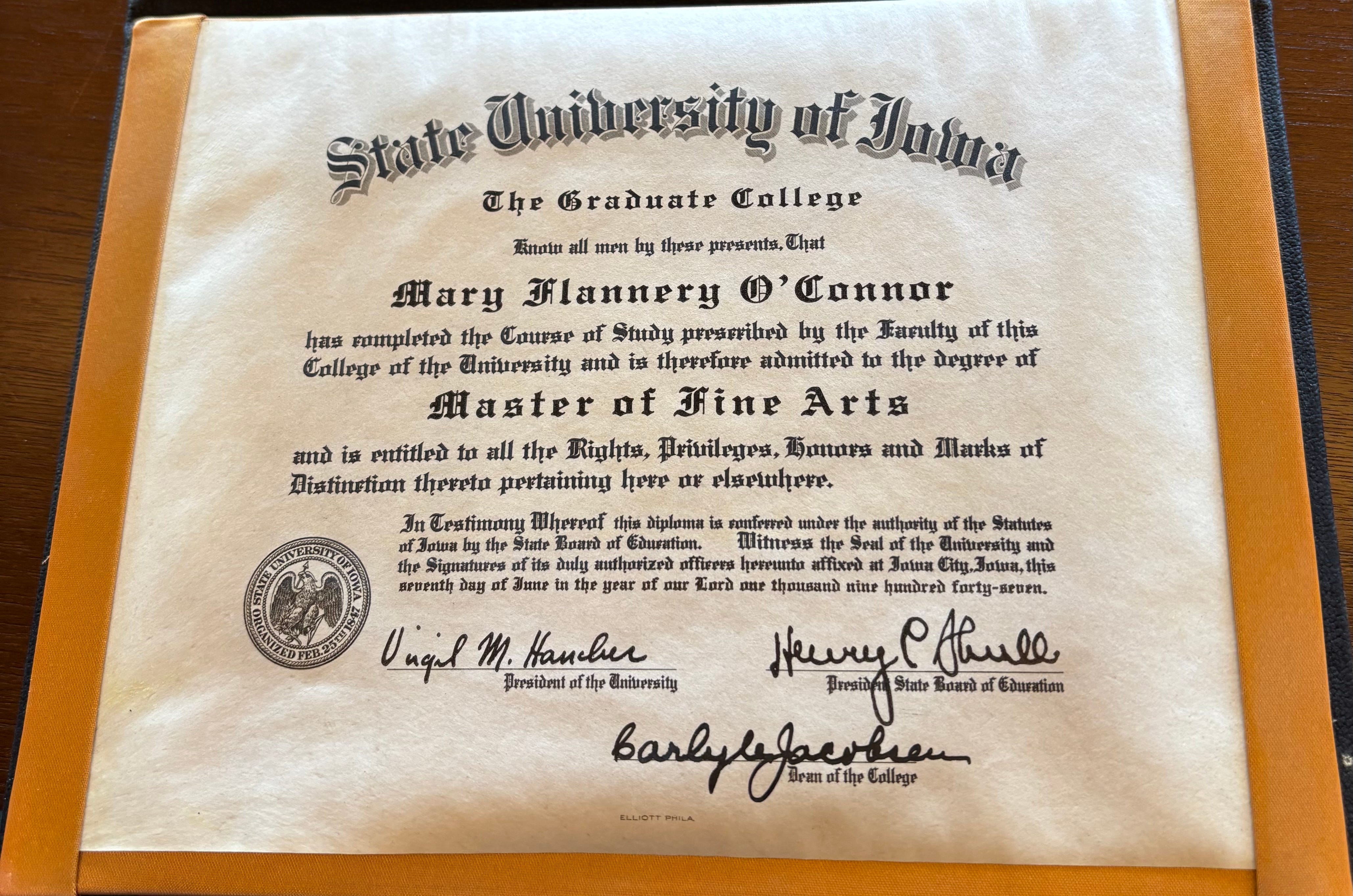
Here’s the background: When Flannery O’Connor finished her MFA at Iowa in 1947, she went to Yaddo, the granddaddy of writers’ colonies in Saratoga Springs, NY. There, while she was working on her first novel, Wise Blood, she became entangled in the Robert Lowell affair, which involved honest-to-God underworld spies, the FBI, and a red scare panic in the highest echelon of literary America. In the fallout, O’Connor had to leave Yaddo. Lowell, one of the most important poets at that time, recognized that he’d done harm to the young writer’s career and made arrangements for a place for her to land.
That led him to Robert Giroux’s office, where they called their mutual friend, noted poet and translator, Robert Fitzgerald.
Flannery, along with the three Roberts, agreed she should go live with Fitzgerald and his wife Sally in Connecticut. She could help Sally with their passel of children.
Sally is largely the reason the Flannery O’Connor holds the position she does in Southern Letters. Although O’Connor had some success in her lifetime, it was her posthumous publications that raised her profile and made her part of the canon. Those publications were Sally’s work. She and Robert edited Mystery and Manners, her collection of essays. Sally edited the collected letters, The Habit of Being. Her work unlocked a coherent vision of Flannery’s writing.

And this is where I come in. While I was working on Porches, Sally and I became friends. I visited her in Boston and I became her occasional driver during the summers she was here in Atlanta researching her unfinished biography. We went to plays, watched tv, and I drove her home from church each Sunday. I showed her an episode of the sci-fi series Babylon Five featuring Brad Dourif, who had also starred in the movie adaptation of Wise Blood. She enjoyed it, saying, “He’s still playing Hazel Motes all these years later.”
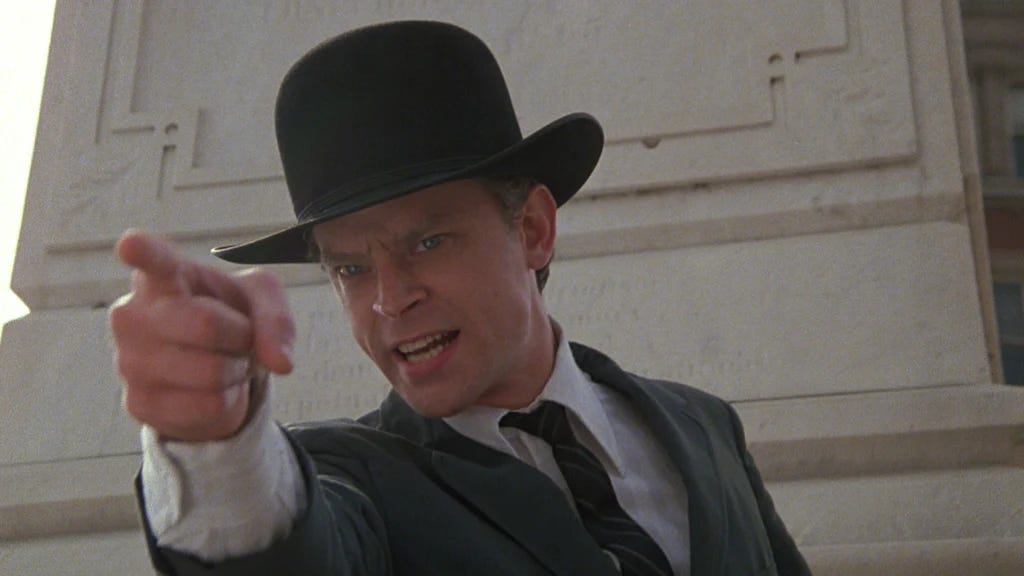
And in the end, this is all a story about Hazel Motes. Because back in 1948, Flannery moved into the apartment above the Fitzgeralds’ garage in order to figure out what to do with him.
As Sally told it, Flannery would go up to her room after breakfast and write until cocktail hour, and Robert would go to his study and do the same. He was working on a new translation of Sophocles at the time. At five each evening, they’d both come to the kitchen where Sally would put up a pitcher of martinis and they’d compare pages.
I can imagine this as a marvelously happy time for the young writer. Sally and Flannery were fast friends. The Fitzgeralds were deeply Catholic and Flannery’s faith was the root of her being. She had time, a place to work, and sympathetic readers who understood what she was trying to write.
But that doesn’t mean her work was easy. She struggled with the novel’s ending, and Hazel Motes wandered pointlessly in Taulkinham. For a while, she brought down meager, unhappy pages to the kitchen.
Oedipus’s Wreck
One evening, Robert brought the passage where Oedipus tears out his own eyes in fury to what the fates have brought him. He explained that it was the most significant moment of the play because it was the only moment that is not pre-ordained. It is Oedipus’ only act of free will. Flannery was transfixed.
When cocktail hour came the next day, she arrived with the pages in which Hazel Motes blinds himself with quicklime.
I still picture Sally’s delight in telling that story and wonder who else she told it to. Maybe she’d told it to large crowds at conferences, maybe only to friends at dinner. I’m sure it would have been featured in the bio she was working on, but although there are plenty of notes, few actual pages of that work survived her.
One of the most iconic, pivotal moments in southern literature was built on an ancient Greek play and rooted in a period of idyllic literary collaboration, not a lonely, confrontational time on a farm with her mother.
Wiseblood was a product of her time in the North and the Midwest, in Iowa, Saratoga, and Connecticut, not Milledgeville. Sorry Ethan and Maya. Nevertheless, I hope to watch the film again. It’s a fine piece of work.
I don’t know if this anecdote has shown up in any O’Connor scholarship, but it’s not the first time she’s been linked to Sophocles.
After Flannery died, Thomas Merton, author of The Seven Storey Mountain and noted Trappist Monk wrote a much-quoted epitaph: “When I read Flannery O’Connor, I do not think of Hemingway, or Katherine Anne Porter, or Sartre, but rather of someone like Sophocles. What more can you say for a writer? I write her name with honor, for all the truth and all the craft with which she shows man’s fall and his dishonor.”
Song of the Week
Saratoga? Check. Underworld Spies? Check. Vanity? Check. (After all, here’s your narrator inserting himself into important literary conversations he doesn’t belong in—if that’s not vain, I don’t know what is.)
The Song of the week must be Carly Simon’s “You’re So Vain.”
I took my Mom to see Eudora speak once when Jane brought her to town! We were thrilled.
This post is a terrific read. How did I never make the Oedipus connection before re: Hazel Moates?! When I was in high school, our English teacher trooped about five of us (how did we all fit in her Karmann Ghia? Must have been two cars?) over to Milledgeville to meet Regina (Flannery's mother), who was quite old in 1976, but how and why that came about escapes me. I remember the house was dark because someone drew the drapes, there was memorabilia, and I was afraid of her.